Mission
Position
For the first time in our planet’s history, the anthropomass—the mass of human-made goods—now outweighs the biomass—the mass of all living things. In pursuit of our own technological advancement, humanity has rapidly unraveled what has taken Nature billions of years of evolution to create, resulting in a threat to the continued viability of life on Earth.
Humanity is a part of Nature, yet the world we have designed has created a rift between us. It is now our responsibility to heal it.
Policy
OXMAN proposes the creation of design solutions by, for, and with Nature while advancing humanity. This holistic approach demands that we design across scales and kingdoms for systems-level impact.
Categorical delineations between climate change and global pandemics, loss of biodiversity and loss of empathy for one another give way to authoring systems that address manifold challenges. In doing so, we open ourselves up to moving beyond mere maintenance toward the radical betterment of Nature.
Nature-centric design
Nature-centric design views every design construct as a whole system, intrinsically connected to its environment through heterogeneous and complex interrelations that may be mediated through design. It embodies a shift from consuming Nature as a geological resource to nurturing her as a biological one.
Bringing together top-down form generation with bottom-up biological growth, designers are empowered to dream up new, dynamic design possibilities, where products and structures can grow, heal, and adapt.
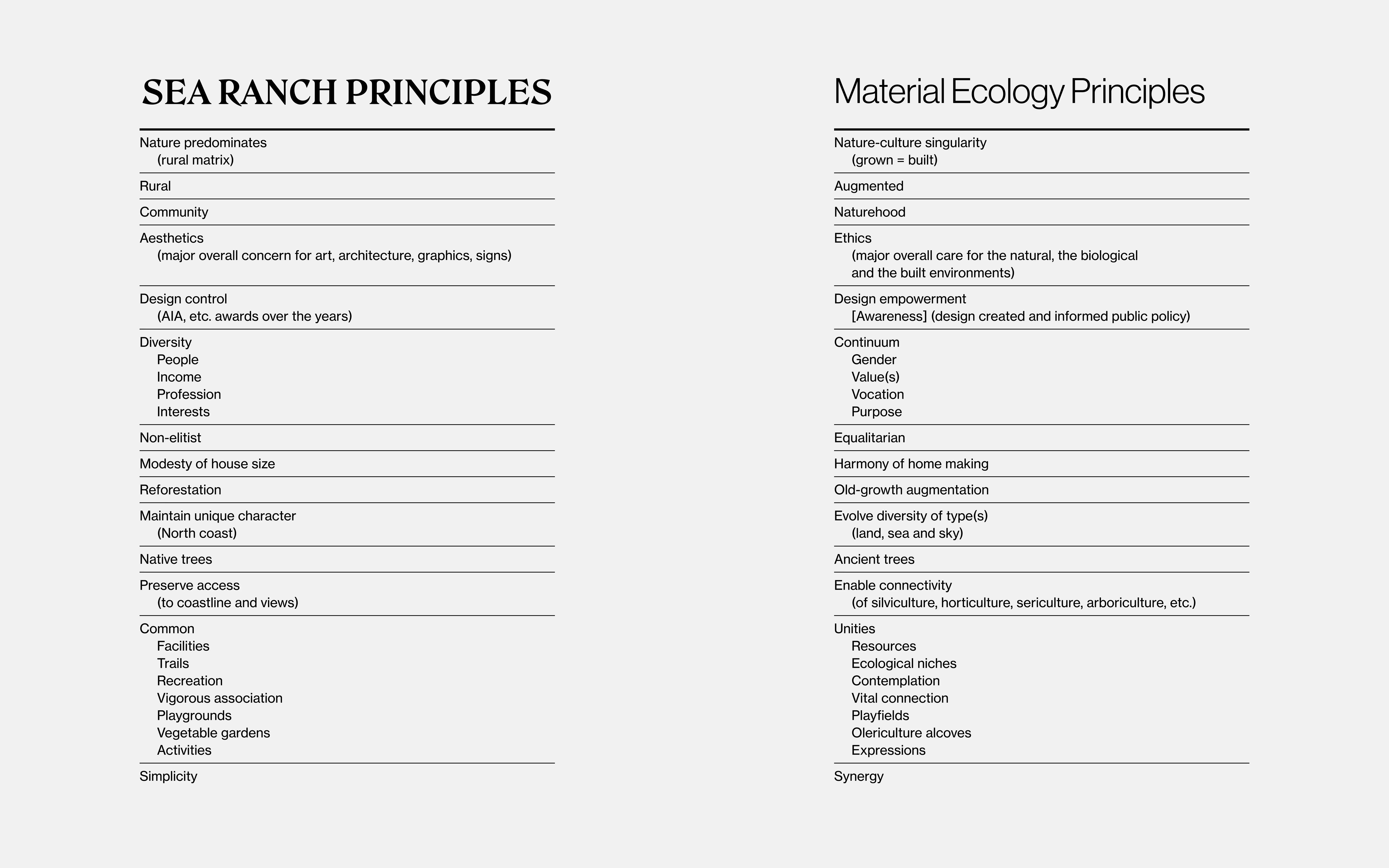
By placing a multiplicity in the form of an × between Nature and humanity, we call for a radical realignment between grown and built environments.
We transition from the current dichotomy of consumption on the one hand and preservation on the other to a relationship that embodies complete synergy, acknowledging that the interconnected whole is far more than the sum of its parts.
First principles
Nature as co-client
We call for a shift in how we perceive clientele and commercial viability, turning Nature into a co-client within the design practice.
Nature-centric design
Nature-centric design invites the creation of design solutions at the service of Nature while advancing humanity.
Activist design
Activist design utilizes technology stakes in urging commissioning corporations to implement Nature-centric values across the design, construction, and manufacturing industries.
Growth over assembly
Computational design through self-organization enables the generation of vast, diverse forms similar to those that emerge through the biological growth processes found in Nature.
System over object
System-centric design considers any design construct—wearable, product, or building—a system of quantified interrelations across natural, biological, and digital domains.
Technology over typology
Platform technologies position the scientific method and technological innovation as the kernel of the architectural practice, revisiting timeworn typologies.
Difference over repetition
Perceived repetition in the natural world exists only through underlying difference and variation in response to environmental constraints, pointing toward design for behavior over form.
Integration over segregation
Functionality is not embedded in design constructs via discrete material components but rather distributed inseparably across a single intelligent system which is greater than the sum of its parts.
Decay over disposal
Programmed decay may be designed such that matter is consumed by the same ecosystem which sprouted it to fuel new growth, thereby empowering resource cycles rather than depleting them.