Silk Pavillion II
Silkworm-spun pavilion
Research team: João Costa, Christoph Bader, Sunanda Sharma, Felix Kraemer, Susan Williams, Jean Disset, Nitzan Zilberman (curation). Undergraduate researcher: Sara Wilson. Prof. Neri Oxman
Year: 2020
Location: MoMA. 2020. New York, NY
Platform: Co-fabrication
Position
What are radically sustainable methods for spinning, weaving, making and building in the age of the Anthropocene? How can humankind and members of other species such as silkworms collaborate in the construction of objects, products, and buildings? Can we extract silk without boiling cocoons?
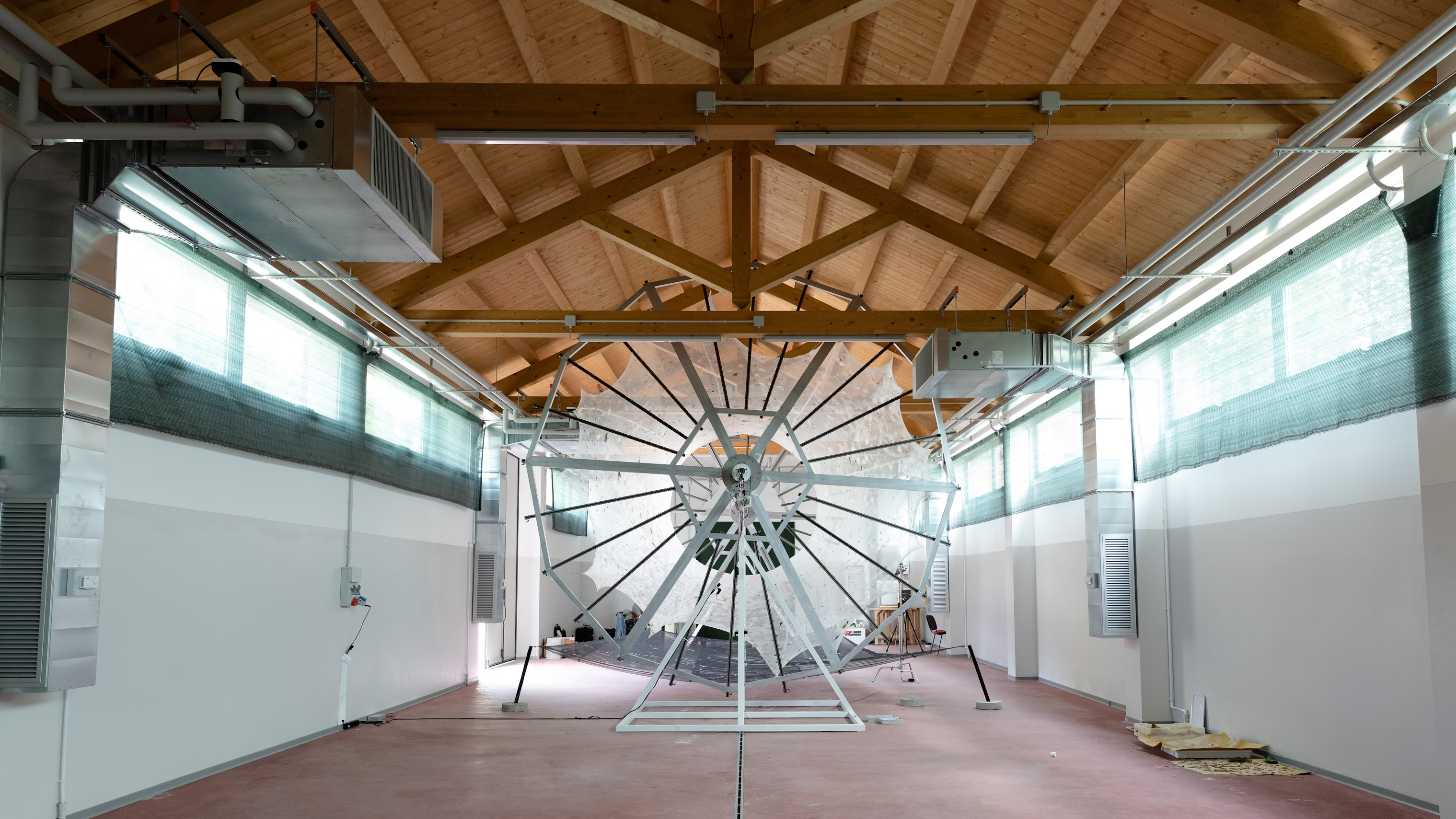
Commissioned for the Material Ecology exhibition at the Museum of Modern Art, New York, Silk Pavilion II stands six meters tall and five meters wide. Building upon research developed for Silk Pavilion I, this successor project tackles challenges associated with scale and sericulture. The project utilizes an integrated kinetic mandrel designed to guide the natural spinning motion of the silkworms through clockwise rotation, fusing technology and biology to unite the woven and the spun.


Process
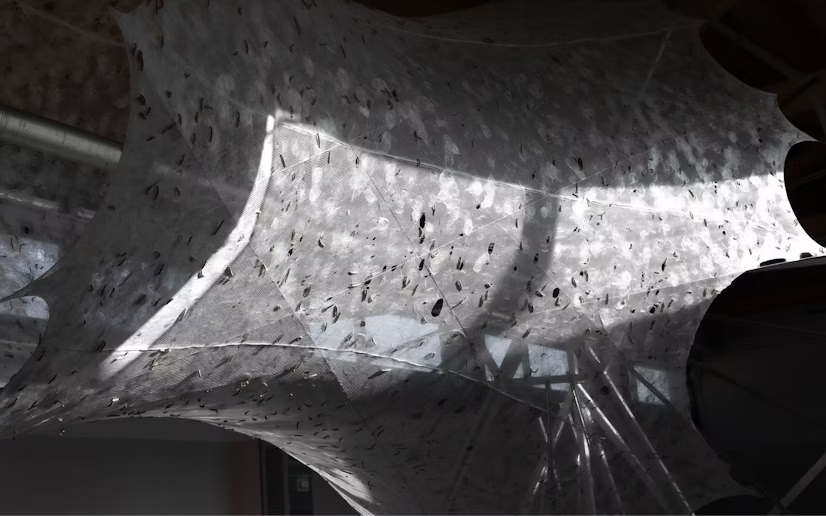
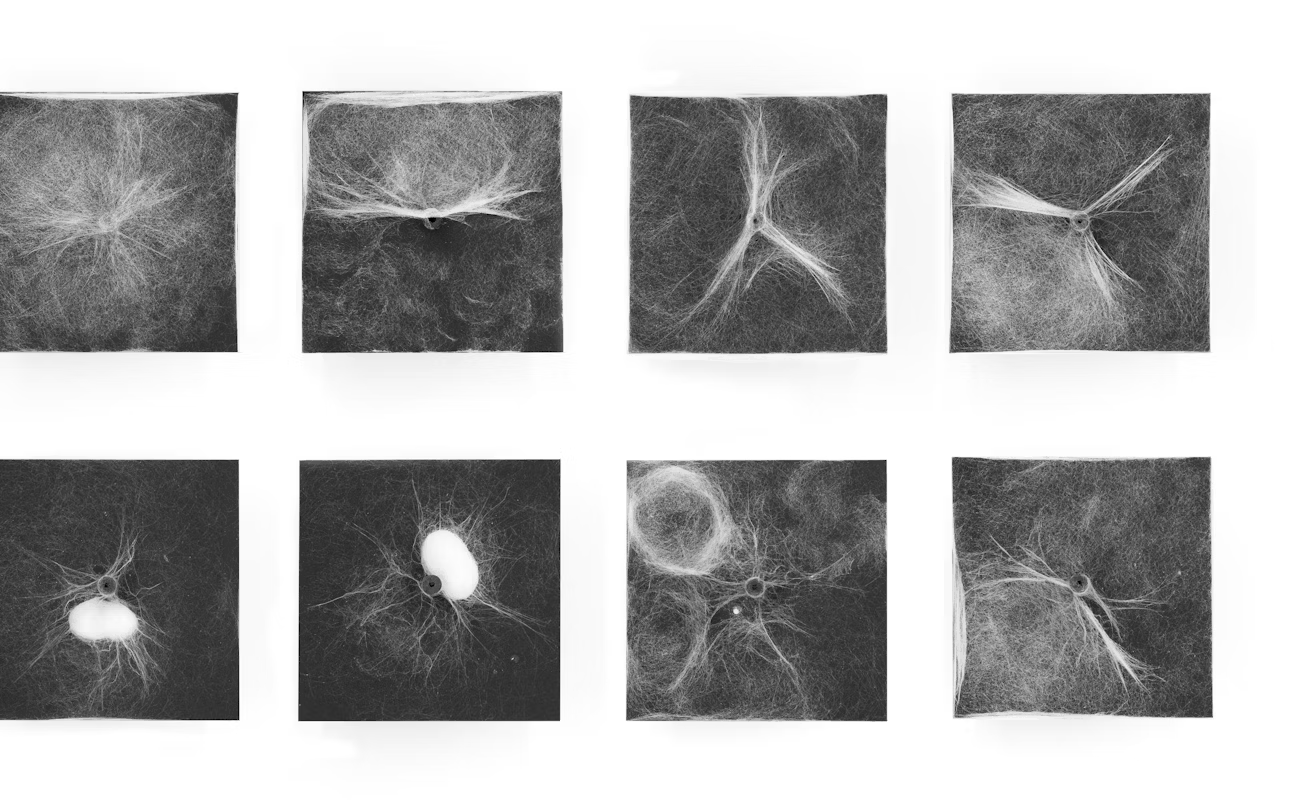
The Pavilion was constructed in horizontal orientation, with mechanical top-down kinetic manipulation enabling constant clockwise rotation of the mandrel that facilitates the silkworms’ upward spinning motion. Fiber density across the surface area of the structure varies as a function of local environmental factors such as the direction, duration and intensity of heat and light, as well as the topology of the kinetic hyperboloid that is designed to guide the movement of the silkworms. These factors can affect the silkworms’ movement and spinning, and thereby the resulting thickness of the silk layer produced.
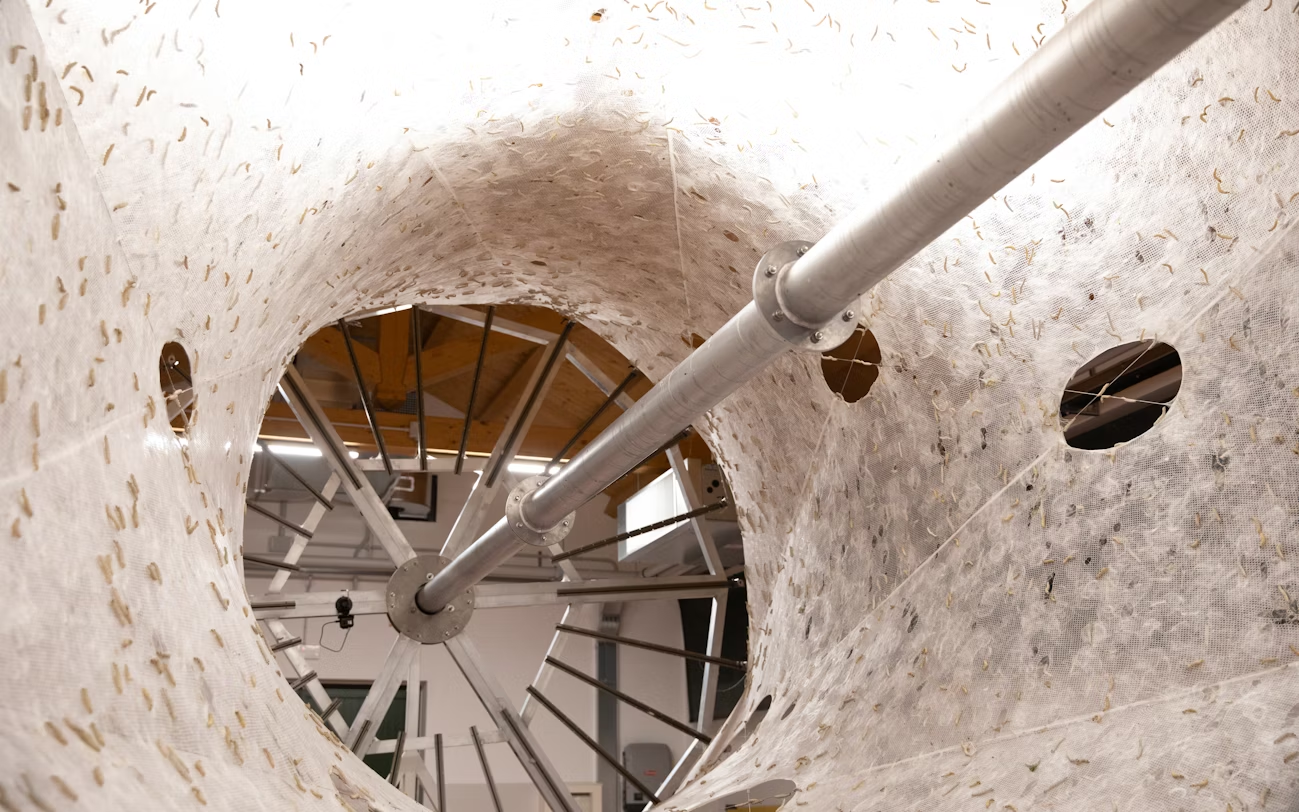
The Pavilion’s primary structure and the soluble knit scaffold are stretched with a cable system; given its physical properties, the intermediate knit yarn layer acts as support for the silkworms. The holes, which release some of the tensile stress in the structure, result from chemical reactions between the silkworms’ excretions and the underlying yarn. These structural forces are influenced biochemically, expressing a ‘metabolic footprint’ of the silkworms’ fluxes and flows.

Product
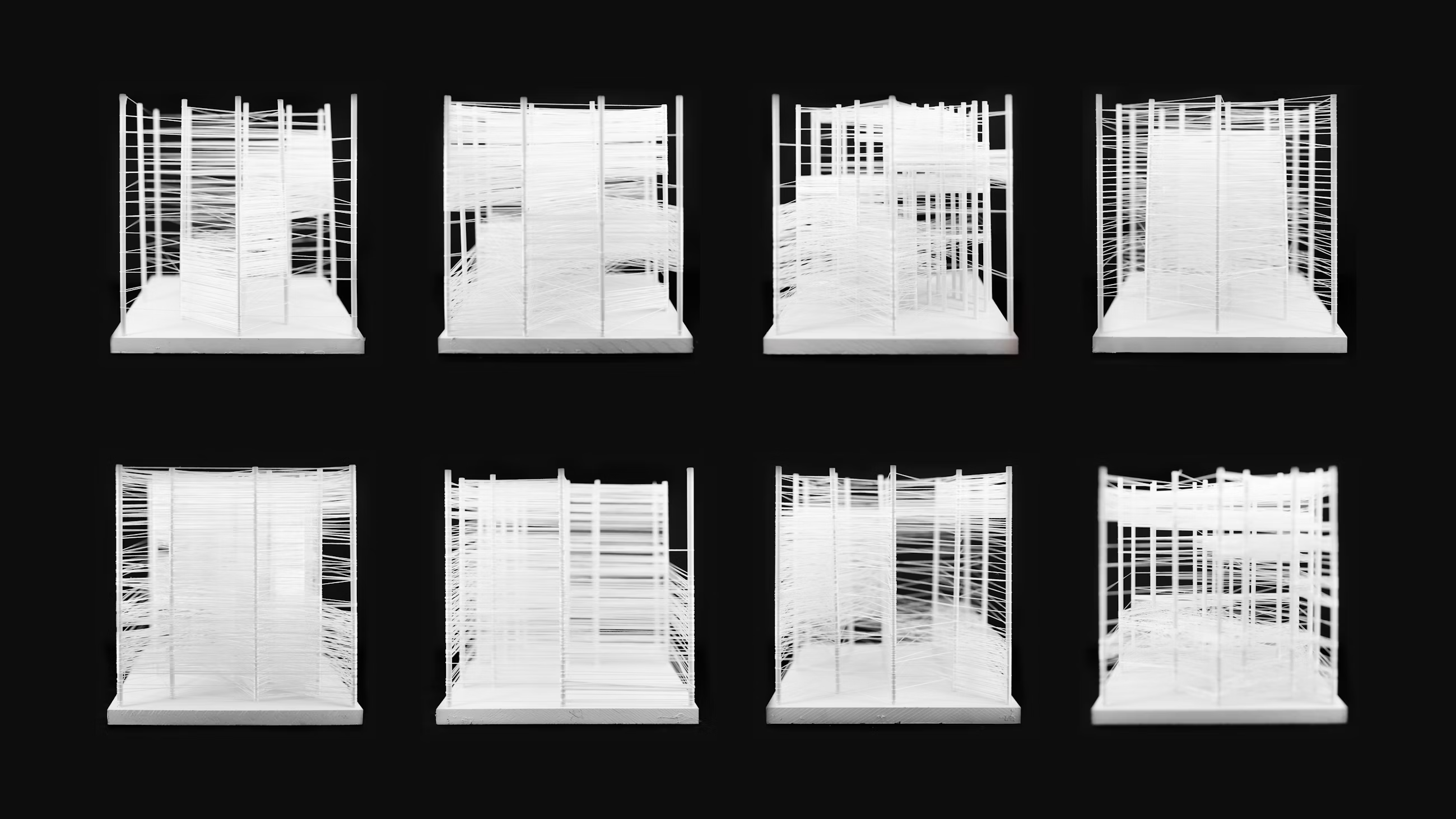
The Pavilion is made of three interrelated layers. Its innermost primary structure is comprised of one-dimensional, braided steel-wire ropes. Its secondary structure is a two-dimensional fabric on which silkworms are positioned.
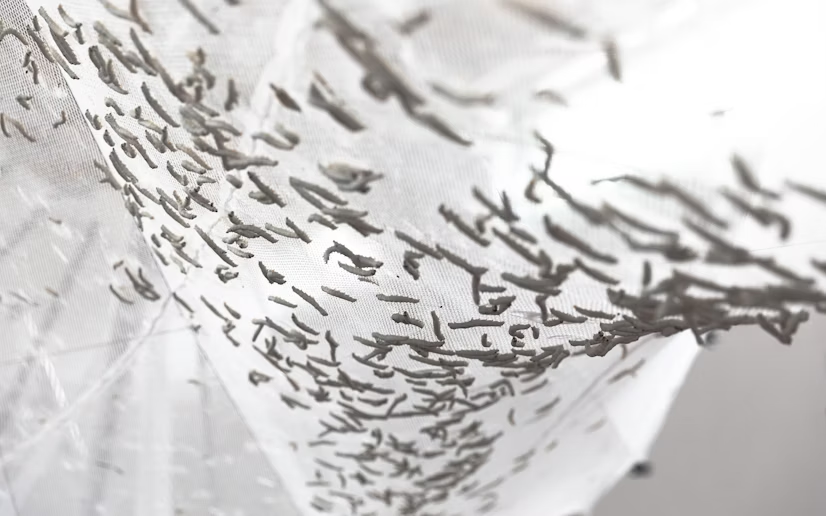
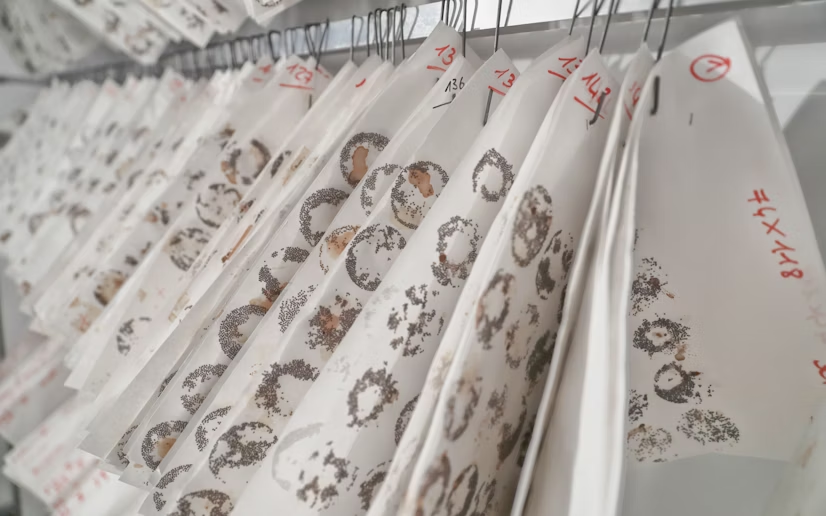
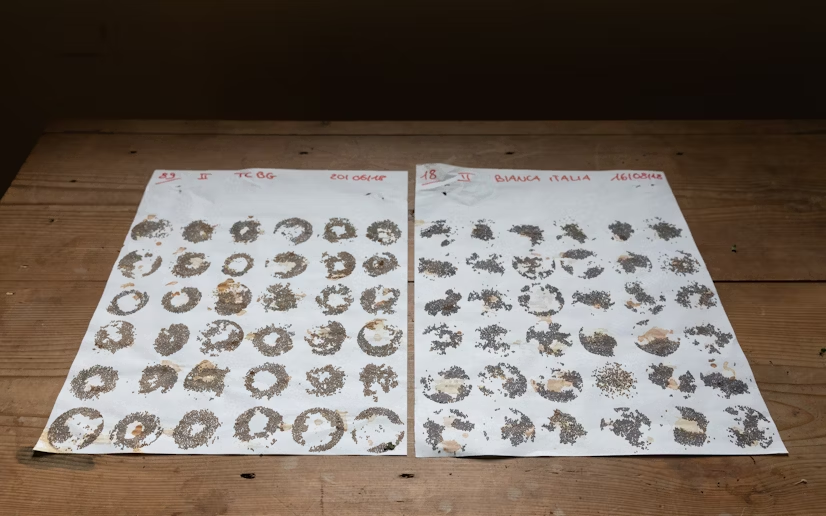
The tertiary, three-dimensional structure is biologically spun with the output of 17,532 silkworms sourced from Teolo, Italy, one of the most extensive silkworm-rearing facilities in Europe. In this region of Veneto, the tradition of sericulture and silk manufacturing blossomed during the 12th century Renaissance.

Policy
Sericulture has been criticized by animal welfare and animal rights activists due to the fact that the process of harvesting silk from the cocoon kills the larva. In the textile and silk industry today, silkworms are exterminated while in their cocoons, dissolving the adhesive that glues one strand of silk to the layers below. This process allows a single silk filament to be unrolled from the cocoon but disrupts the life cycle and development of the organism.
As the Silk Pavilion demonstrates, structures can influence silkworms to spin in sheets instead of cocoons, thereby producing the same quantity of silk without boiling cocoons. The project illustrates how these compact and unique insects can act not only as living looms but as co-designers collaborating with humans to design and construct architectural-scale structures embodying co-fabrication for cohabitation. While it is a well-known fact that even the harvesting of Eri or Ahimsa silk (processed without killing silkworms through hand-spinning) is problematic due to the domestication, breeding, and exploitation of animals; our hope is that the research underlying this work will inspire many to question 7,000 years of sericulture policy at large.

Publications
Credits
Collaborators & Contributors: Davide Biasetto, Il Brolo Società Agricola SRL, Padua; Levi Cai; Silvia Cappellozza and Alessio Saviane, Council for Agricultural Research and Agricultural Economics Analysis (CREA-AA), Bologna; Natalia Casas; Kelly Egorova; Fiorenzo Omenetto, Tufts University; Sol Schade, Advanced Functional Fabrics of America (AFFOA); James C. Weaver, Wyss Institute, Harvard University; Bodino; Front Inc.; The Robert Woods Johnson Foundation; MIT Media Lab
Commissioned by The Museum of Modern Art for Neri Oxman: Material Ecology
Organized by Paola Antonelli and Anna Burckhardt
All images and videos courtesy of Neri Oxman and The Mediated Matter Group