Vespers II

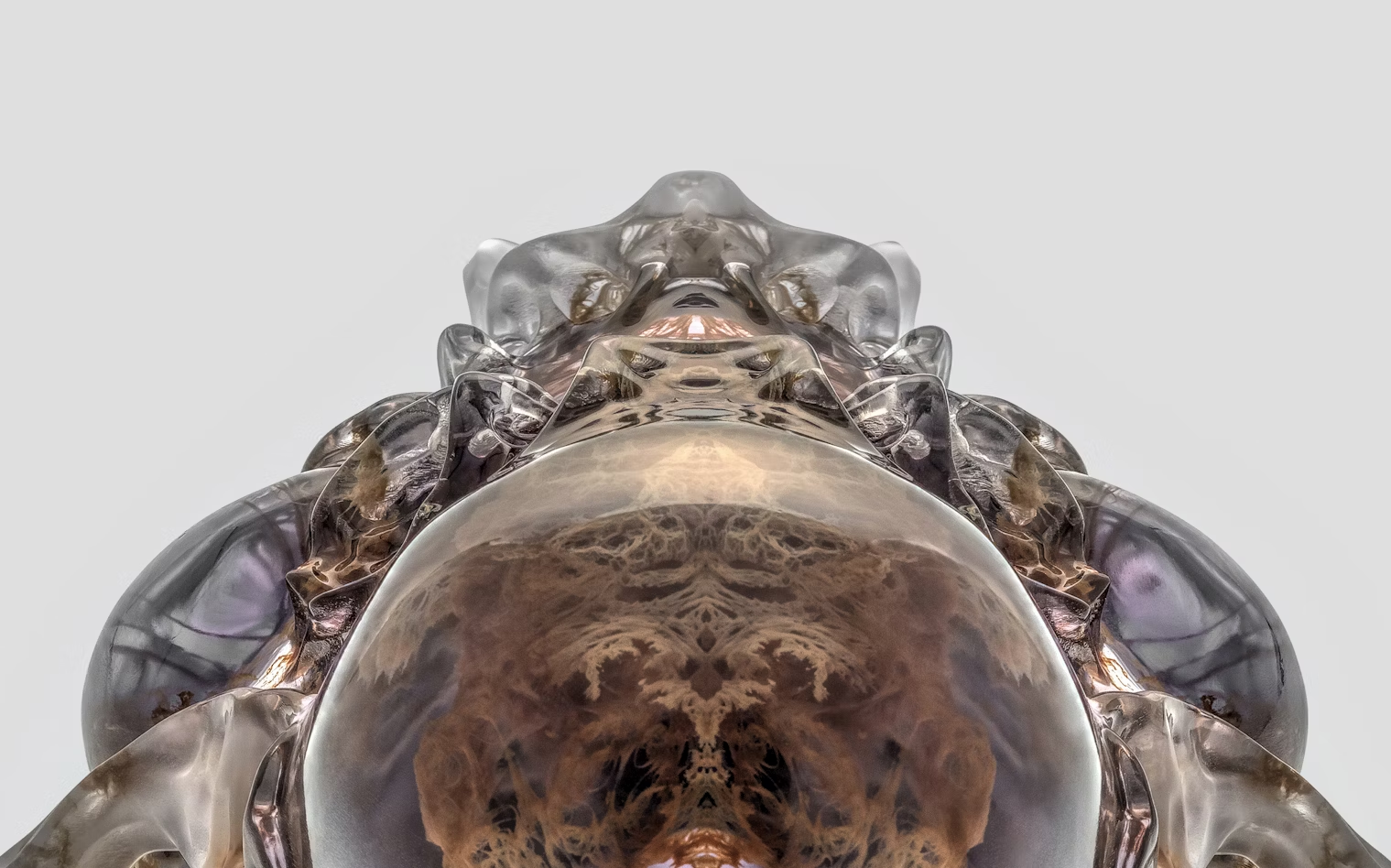
Hybrid living mask prototypes
Research team: Christoph Bader, Dominik Kolb, James C. Weaver. Prof. Neri Oxman.
Year: 2017
Location: Design Museum, 2016, London, United Kingdom. National Gallery of Victoria, 2018, Melbourne, Australia
Platform: Data Driven Material Modeling
Position
The custom of the death mask in the ancient world was believed to strengthen the spirit of the deceased and guard their soul from evil spirits on their way to the afterword. In this view, death is a conduit to a form of rebirth. The mythical notion that the soul can be guided from a state of death to a new state of life inspired the design of the masks in the second series.
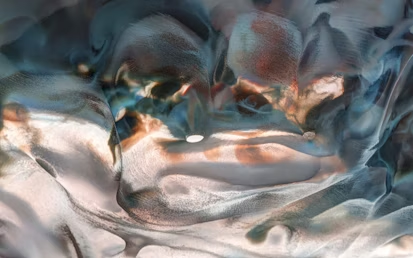
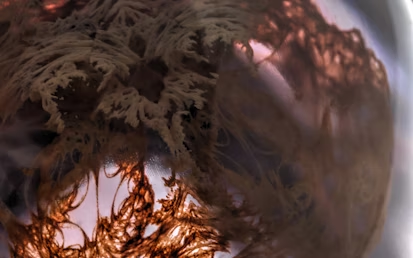
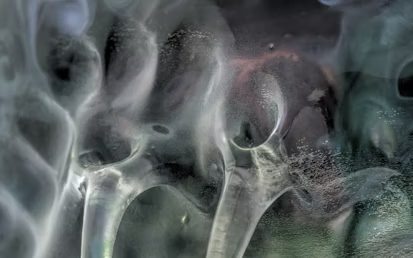
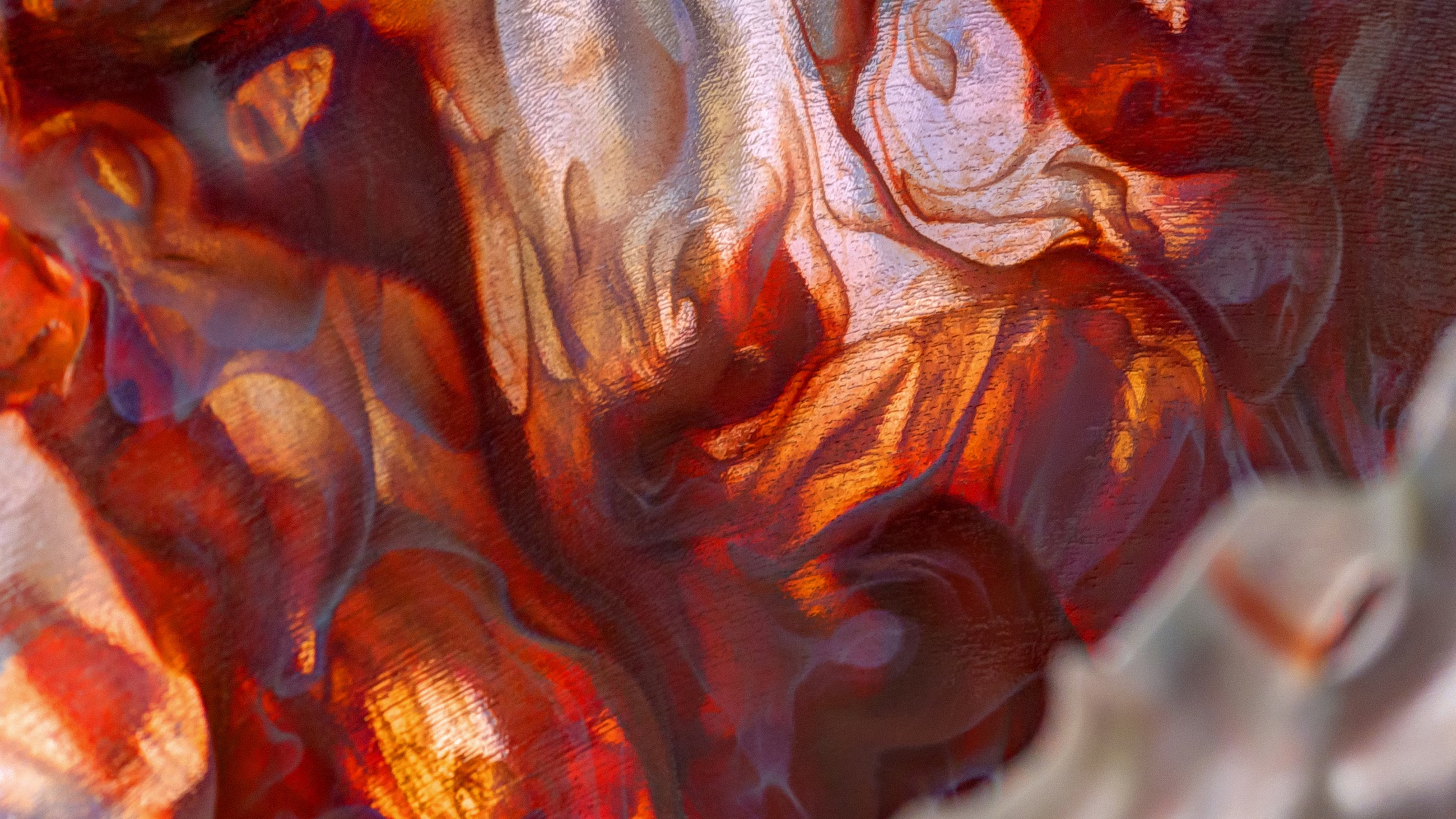
In Vespers II, it is the interplay of light that reveals these internal structures. Like spirits (from Latinspiritus, meaning “breath”), the internal structures reference the distribution of the martyr’s last breath.
Process
To create the Vespers masks, we developed a data-driven approach for the creation of high-resolution, geometrically complex, and materially heterogeneous 3D printed objects at product scale. Titled Data-driven Material Modeling (DdMM), this approach utilizes external and user-generated data-sets for the evaluation of heterogeneous material distributions during slice generation for 3D printing, thereby enabling the production of voxel-matrices describing material distributions for bitmap-printing at the printer’s native resolution.
The series utilizes our bitmap-slicing framework to inform material property distribution in concert with slice generation, in real time. In contrast to existing approaches occupying the intersection of computational design and additive manufacturing, this framework emphasizes the ability to integrate multiple geometry-based data sources to achieve high levels of control for applications in a wide variety of design scenarios.


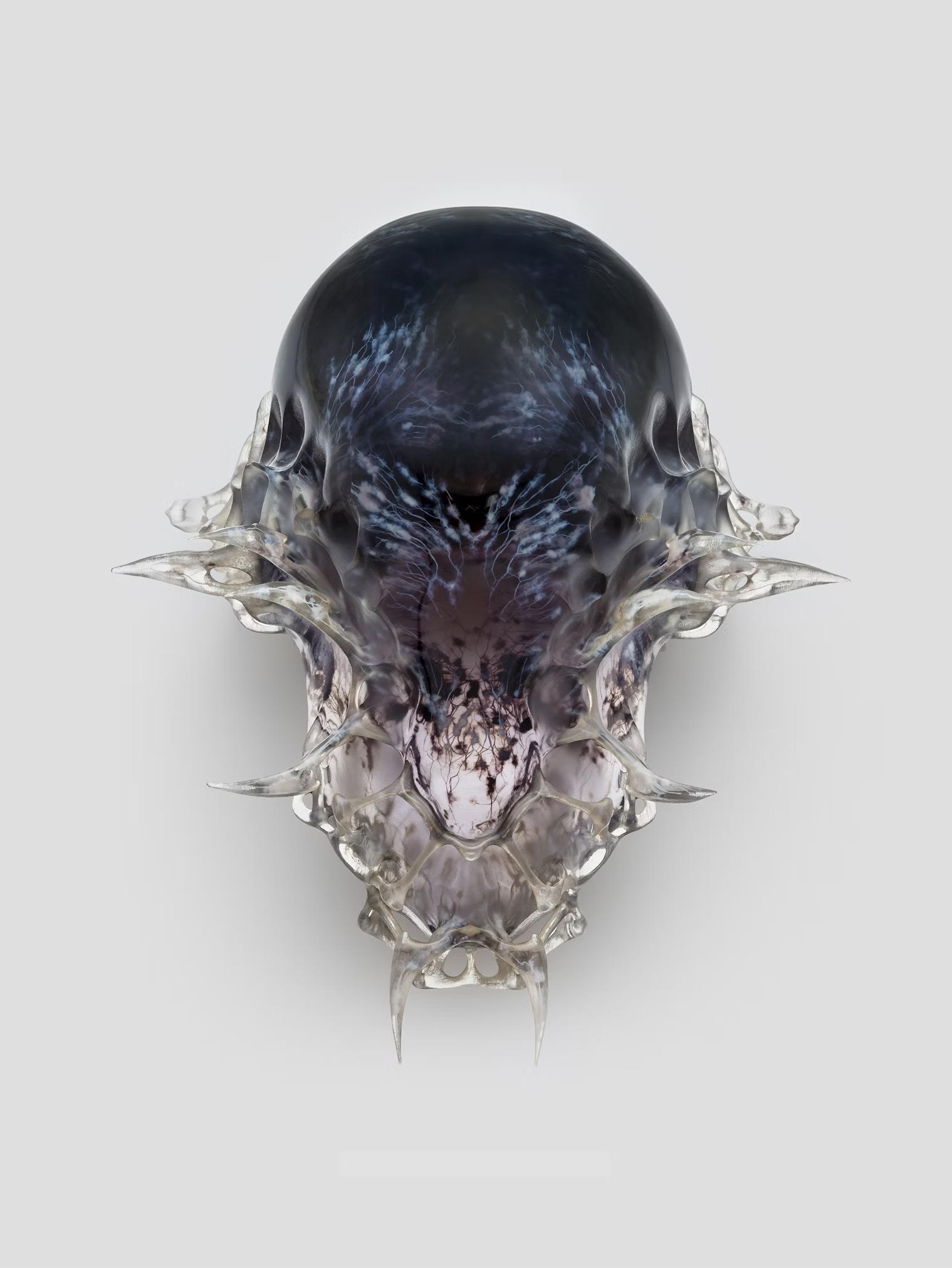
The inner structures of the Vespers masks are entirely data driven and are designed to match the resolution of structures found in nature. Expressed through changes in formal and material heterogeneity—from discontinuous to smooth, from surface to volume, from discrete to continuous —this series conveys the notion of metamorphosis.
Using spatial mapping algorithms, the culturally coded surface colorations and truncated geometries in the first series are transformed into colored, internal strands within transparent, smoothly curved volumes in the second. For example, the distribution of colors across the ‘crown of thorns’ mask in the first series becomes internal nerve axons in its martyr’s mask in the second series.


Credits
Collaborators & Contributors: Gal Begun; Boris Belocon; Ahmed Hosny; Naomi Kaempfer; Danielle Van Zadelhoff; MIT Media Lab
Created in collaboration with Stratasys Ltd. for the New Ancient Collection
All images and videos courtesy of Neri Oxman and The Mediated Matter Group